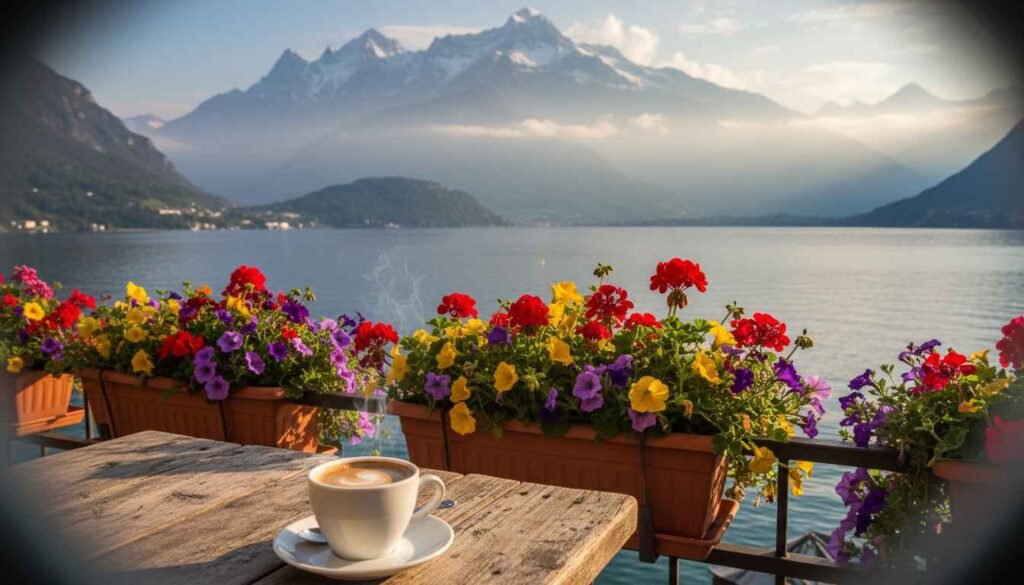
Switzerland’s southern edge, where the country meets Italy, is a place of two cultures in one landscape. In the canton of Ticino, Italian is the everyday language, palm trees grow beside Alpine lakes, and a train ride can take you from a lakeside promenade to a mountain pass in under an hour. This corner of Switzerland is not a single town or resort — it is a compact region of lake towns, medieval castles and high Alpine valleys, all within easy reach of the Italian border.
The best way to explore it is to pick one lake town as a base and make day trips from there. Lugano and Locarno are the two natural choices, and both are well connected by train to the rest of Switzerland and, across the border, to Milan.
Lugano and Lake Lugano
Lugano is the largest town in Ticino and the easiest introduction to the region. Its waterfront promenade runs along Lake Lugano, with views across the water to Monte San Salvatore and Monte Brè, both reachable by funicular for a broader panorama. The old town behind the lakefront is small and walkable, with arcaded streets, cafes and the cathedral of San Lorenzo above the town.
Lugano works well as a base because it sits on the main north-south rail line through the Gotthard. From here you can reach Locarno and Bellinzona by train, and Milan in about an hour, which makes it simple to extend a Swiss trip into Italy — our guide to the best places to visit in Italy is a useful starting point if you plan to cross the border for a few days.
Locarno, Ascona and Lake Maggiore
Locarno, at the northern end of Lake Maggiore, has a noticeably Mediterranean feel, with a lakeside piazza, subtropical gardens and a mild climate that makes it pleasant outside the summer peak. Nearby Ascona is quieter, with a car-free lakeside promenade and a small old town of narrow lanes.
From Locarno you can take a boat on Lake Maggiore. Note the geography before you plan: the lake itself straddles the border, and the famous Borromean Islands are on the Italian side, while the Brissago Islands, with their botanical garden, are on the Swiss side near Ascona. Both are worth a boat trip, but they are not in the same country, so check the timetable and border crossing for the day you choose.
Bellinzona and Its Three Castles
Bellinzona, a short train ride north of Lugano, is the region’s history stop. Its three medieval castles — Castelgrande, Montebello and Sasso Corbaro — are a UNESCO World Heritage site, and together with the town walls they once guarded the Alpine passes between northern and southern Europe. Castelgrande, in the centre of town, is the easiest to visit, with a museum and views over the valley; the other two are a walk or short bus ride away. Bellinzona is compact, so the castles and the old town fit comfortably into half a day.
Zermatt, Brig and the High Alps
Further west, the Valais region offers the Alpine side of the border country. Zermatt, the car-free village beneath the Matterhorn, is the headline destination here, reached by train from Brig or Visp. Zermatt is a serious mountain destination rather than a casual stop: it is best for visitors who actually want to hike, ski or ride the mountain railways, and it rewards an overnight stay rather than a rushed day trip.
Brig itself is a practical gateway town, with its old town and the Stockalper Palace, and it sits on the route of the Simplon Pass and Simplon Tunnel into Italy. If you are travelling between Switzerland and northern Italy by rail, Brig is a junction you will likely pass through, and it makes a sensible overnight stop on a longer Alpine crossing.
Practical Tips for the Swiss-Italian Border Region
A few practical points make the trip smoother. Switzerland and Italy are both in the Schengen area, so there is normally no passport control at the border, but you should still carry your passport or national ID card. Switzerland uses the Swiss franc, not the euro, even in Italian-speaking Ticino; euros are accepted in some tourist businesses near the border, but you will get change in francs, so carrying francs is simpler. Trains are the easiest way to move between Lugano, Locarno, Bellinzona and Brig, and a rail pass or day pass is worth comparing against individual tickets if you plan several day trips. Finally, remember that this is a border region, not a single resort: distances are short, but mountain weather changes quickly, so check conditions before heading up to Zermatt or a lakeside boat trip. If you are crossing borders on a longer trip, it is also worth reviewing travel insurance explained: what you actually need before you go, since a trip that spans two countries can complicate a claim.
FAQ: Places to Visit in Switzerland Near Italy
What is the best base for this region? Lugano for transport links and a town base, or Locarno for a quieter lakeside stay. Both connect easily to Bellinzona and to Milan.
Can I visit Italy on a day trip? Yes. Milan is about an hour from Lugano by train, and Lake Maggiore’s Italian shore is reachable by boat or car from Locarno and Ascona. Carry ID and check train and boat timetables in advance.
Is the region suitable for families? Yes. The lake promenades, the Brissago Islands garden, the Bellinzona castles and the mountain railways all work well with children, and distances between towns are short.
When is the best time to visit? Late spring to early autumn is best for lakes and hiking; winter is best for Zermatt and the ski areas. The lake towns are quieter, and often more pleasant, outside the July and August peak.
The Swiss-Italian border region rewards travellers who slow down: one lake town as a base, a castle, a boat trip and a mountain day will show you more of it than a rushed tour of every name on the map. If you are planning a longer Swiss trip with a partner, our guide to the best places to visit in Switzerland for couples covers other parts of the country in the same style.