
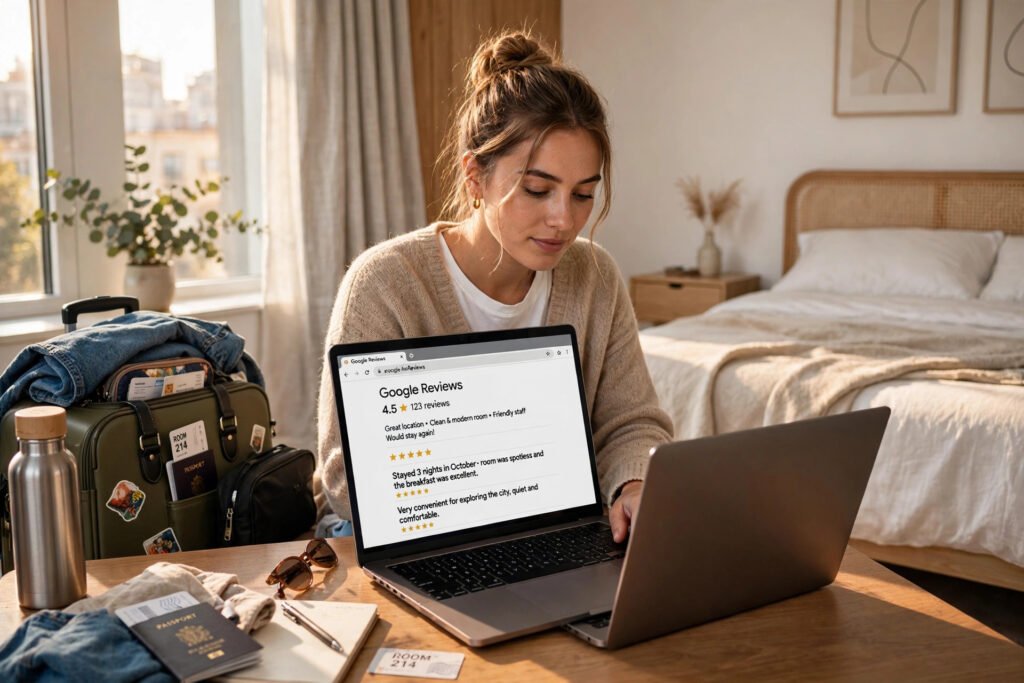
Hotel reviews can save you from a noisy room, a misleading photo or a location that looked central and was not. They can also mislead you — a handful of glowing five-star reviews, a flood of complaints about one bad week, or a property gaming the system can all distort the picture. Learning to read reviews properly takes ten minutes and can change the whole trip. Here is how to do it.
Start With the Pattern, Not a Single Review
Never judge a hotel by one review, good or bad. Read the overall score, then scan reviews across several months to see whether the same points keep coming up. If ten different guests mention thin walls, slow Wi-Fi or a long walk to the station, that is a pattern worth believing. If one guest complains about something nobody else mentions, treat it as an outlier — it may reflect one bad stay rather than the hotel itself.
Pay attention to the dates. A hotel that was renovated last year should be judged mainly on reviews since the renovation; older complaints about tired rooms may no longer apply. Conversely, a property whose recent reviews have suddenly turned negative may be under new management or cutting costs. Sort by most recent first, then read a mix of five-star, three-star and one-star reviews — the middle ratings are often the most honest, because they praise and criticise in the same breath.
How to Spot a Fake Review
Fake reviews exist on both sides: properties posting praise for themselves, and competitors or disgruntled ex-guests posting attacks. Several warning signs help you spot them. Be suspicious of reviews that are vague and effusive without a single concrete detail — “amazing hotel, best stay ever, highly recommended” with no mention of a room, a meal or a member of staff. Genuine guests usually mention something specific: the size of the bathroom, the breakfast queue, the noise from the street.
Other red flags include a cluster of five-star reviews posted within a few days of each other, especially if the reviewers have only ever reviewed that one hotel; reviews that read like marketing copy, repeating the hotel’s own slogans; and reviews that praise a property in a different city or get basic facts wrong. On the negative side, watch for one-star reviews that attack a named individual rather than describing a stay, or that repeat the same wording across several accounts. If a hotel’s review profile looks too perfect — hundreds of five-star ratings and almost nothing below four — treat it with the same caution as a profile full of complaints.
Cross-checking helps. Compare the same hotel across two or three platforms: a genuine pattern shows up everywhere, while a suspicious spike usually appears on only one site. Also check whether the platform marks reviews as verified stays; verified reviews carry more weight than anonymous ones.
Read for What Matters to You
Not every complaint matters to every traveller. A reviewer upset about the lack of a gym is irrelevant if you never use one; a reviewer praising the nightlife is unhelpful if you want quiet. Filter reviews by traveller type where the platform allows it — families, couples, solo travellers and business guests notice different things — and look for comments on the factors that decide your stay: noise, bed comfort, cleanliness, location, breakfast and staff helpfulness.
Photos from guests are often more revealing than the hotel’s own gallery. Look for unfiltered pictures of the room, the bathroom and the view from the window, and compare them with the official photos. If guest photos consistently show smaller rooms or older furnishings than the marketing shots, adjust your expectations. Also read the hotel’s responses to negative reviews: a polite, specific reply that explains what was fixed suggests a management team that cares, while silence or defensive replies suggest the opposite.
Location Claims Deserve a Map Check
“Centrally located”, “minutes from the beach” and “near the airport” are among the most stretched claims in hotel marketing. Open a map and check the actual walking distance to the places you plan to visit, and read reviews specifically about the neighbourhood: is it noisy at night, is it safe to walk after dark, is there anywhere to eat nearby? A hotel two streets from a station can still be a poor choice if the walk passes through an unlit industrial area.
Before you book, it also helps to have the rest of the trip in order — our travel documents checklist for international trips covers passports, visas and insurance so a hotel problem is not compounded by a paperwork one. And if you are still at the planning stage, our guide to finding cheap flights for your next holiday pairs well with hotel research, since flight and hotel dates usually need to be fixed together.
A Quick Checklist Before You Book
Run through this before paying: read at least ten recent reviews across two platforms, including some three-star ones; check guest photos against the official gallery; verify the location on a map; confirm what the price includes — breakfast, taxes, resort fees and cancellation terms are common surprises; and read the cancellation policy itself, not just the headline. If a deal looks far cheaper than every comparable hotel, ask why: it may be a room type, a date or a location catch that reviews will reveal.
Hotel reviews are a tool, not a verdict. Used well, they tell you what a stay will actually feel like — the noise, the walk, the breakfast, the bed — in a way no marketing page can. Used badly, they turn one angry guest or one suspicious cluster into a decision. Read widely, look for patterns, check the photos and the map, and you will book with far more confidence.
Frequently Asked Questions
How many reviews should I read before booking a hotel?
At least ten recent ones across two platforms, including a mix of ratings. The pattern across reviews matters more than any single rating.
Can hotel reviews be trusted?
Mostly, yes — especially verified-stay reviews that mention specific details. Treat vague, clustered or marketing-style reviews with caution, and cross-check a hotel on more than one platform.
What is the most reliable sign of a good hotel in reviews?
Consistent praise for cleanliness, bed comfort and staff helpfulness across many months and reviewer types. Those three factors predict a good stay better than a high overall score alone.
Should I ignore one-star reviews?
No — read them, but weigh them against the pattern. A single one-star review among many positive ones is usually an outlier; repeated one-star complaints about the same issue are a warning.