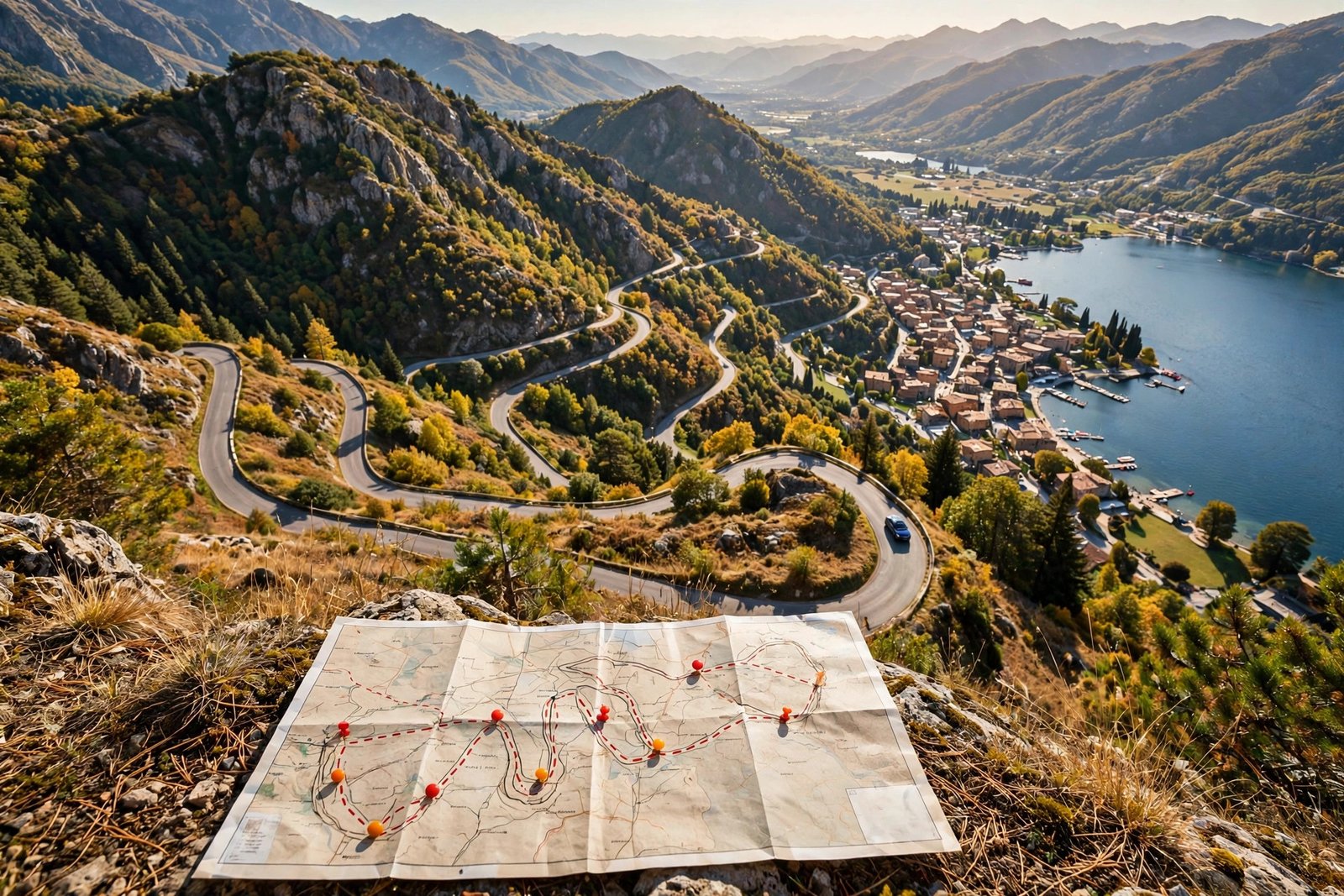
A good road trip is rarely an accident. The trips people remember are the ones where the driving was manageable, the stops were chosen on purpose, and there was room to change the plan when something better appeared. Planning a road trip itinerary step by step is not about scheduling every hour — it is about making a handful of decisions in the right order, so the rest of the trip takes care of itself.
Follow these steps in order. Each one makes the next one easier, and skipping ahead — booking hotels before you know your route, for example — is how itineraries go wrong.
Step 1: Choose Your Route and Overall Distance
Start with the shape of the trip, not the details. Are you driving out and back on the same road, making a loop, or driving one way and flying home? A loop usually works best for a holiday, because it avoids repeating the same road, while a one-way trip needs a plan for getting home or returning the car.
Next, set a realistic total distance for the number of days you have. A useful rule is to keep driving to around two to four hours on most days, with longer days only occasionally. A trip that averages six hours of driving a day leaves little time for the places you came to see, and it is tiring enough to spoil the following day too. Plot the start, the end and the must-see stops first, then let the route connect them.
Step 2: Pick Your Overnight Stops
With the route sketched, choose where you will sleep each night. Aim for towns that offer more than a bed: a place with a walkable centre, a few restaurants and something to do in the evening will make the stop part of the trip rather than just a pause in it.
Space the stops so that no single day is dominated by driving, and put your longest stays where there is most to do. Two nights in one place is usually better than one night in two places, because it gives you a full day without packing, driving and checking in again. Book the first and last nights early, especially in peak season, and keep middle nights flexible if your dates allow it.
Step 3: Build Each Day Around One Main Experience
For each day, choose one main experience — a national park walk, a historic town, a coastal drive, a market — and let the rest of the day support it. This keeps the day focused and prevents the common mistake of listing five attractions and reaching none of them properly.
Order the day’s stops along the road in the direction you are travelling, not by how famous they are. A short detour is fine; backtracking an hour for a single viewpoint is usually not. Leave the last part of each afternoon unplanned, so you can linger somewhere you liked, stop for a meal that was not on the list, or simply arrive at your overnight stop without rushing.
Step 4: Sort Transport, Budget and Bookings
Now sort the practical side. If you are using your own car, get it checked before departure — tyres, oil, brakes and lights — and confirm your breakdown cover includes the area you are travelling in. If you are renting, compare the total cost including insurance and any one-way drop-off fee, not just the daily rate, and check the fuel policy before you sign.
Set a daily budget that covers fuel, food, accommodation and activities, and track fuel costs separately, since they are the easiest to underestimate on a long route. Book accommodation and any timed attraction tickets in advance for peak dates, but leave restaurants and minor stops unbooked so the trip keeps some spontaneity. If your trip involves flights at either end, our guide on how to find cheap flights for your next holiday covers the booking tactics that save the most money.
Step 5: Plan Food, Fuel and Rest Stops
Food and fuel planning matters more on rural routes than on motorways. Note where fuel stations are sparse, especially on mountain or desert stretches, and do not let the tank drop below a quarter on those sections. For food, a mix works best: a packed lunch or supermarket stop on driving days, and a proper sit-down meal in the evening in your overnight town.
Plan rest stops into the driving itself. Stopping every two hours or so keeps the driver alert and gives passengers a break, and it turns the drive into part of the holiday rather than a chore to endure. If you are travelling with children, plan stops with a playground or a short walk, not just a service station.
Step 6: Build in Flexibility and a Backup Plan
Every road trip needs slack. Weather changes, roads close, and a place you expected to love may disappoint while an unplanned stop delights you. Keep at least one day in the itinerary with nothing essential on it, so a delay does not cascade through the rest of the trip.
Also prepare for the things you hope will not happen: a phone charger and offline maps in the car, the number for your breakdown provider, and a basic understanding of your insurance cover. Reviewing travel insurance explained: what you actually need before departure is worth the few minutes it takes, particularly for a trip that crosses regions or borders.
A Sample Five-Day Road Trip Outline
To see how the steps fit together, here is a simple five-day shape. Day one: a short drive to your first overnight town, with an afternoon walk around its centre. Day two: the scenic highlight of the trip, with a morning drive and an afternoon at one main attraction. Day three: a slower day in one place, with a local market or walk and no long drive. Day four: a medium drive along a different route, with two short stops on the way. Day five: a relaxed return, with one final stop and an early arrival home. Adjust the distances to your region, but keep the rhythm: drive, explore, rest, repeat.
FAQ: How to Plan a Road Trip Itinerary Step by Step
How many hours should I drive per day on a road trip? Two to four hours on most days is a good target for a holiday trip. Longer days are fine occasionally, but a trip built on daily long drives leaves little time for sightseeing and is tiring.
Should I book all accommodation in advance? Book the first and last nights and any peak-season stays in advance. Middle nights can stay flexible if you are travelling outside peak season and are comfortable with same-day booking.
What is the biggest road trip planning mistake? Trying to cover too much distance. A shorter route with more time in each place almost always makes a better trip than a longer route seen mostly through a windscreen.
A road trip itinerary is a framework, not a contract. Choose the route, space the stops, give each day one main experience, sort the practical details, and leave room for the trip to surprise you — that is usually the part you remember best.