Why Your Phone Is Your Best Travel Companion
The modern traveler carries more planning power in a pocket than travel agencies had a decade ago. The best travel apps for 2026 cover every stage of a trip: researching destinations, booking flights and stays, navigating unfamiliar streets, translating menus, managing money, and staying connected. The trick is not installing fifty apps, but choosing a tight set that actually earns its place on your home screen.
A good travel app does one of three things: it saves you money, saves you time, or saves you from a stressful situation. This guide focuses on apps that do at least one of those reliably, organized by the stage of the journey where they matter most.
Trip Planning and Itinerary Apps
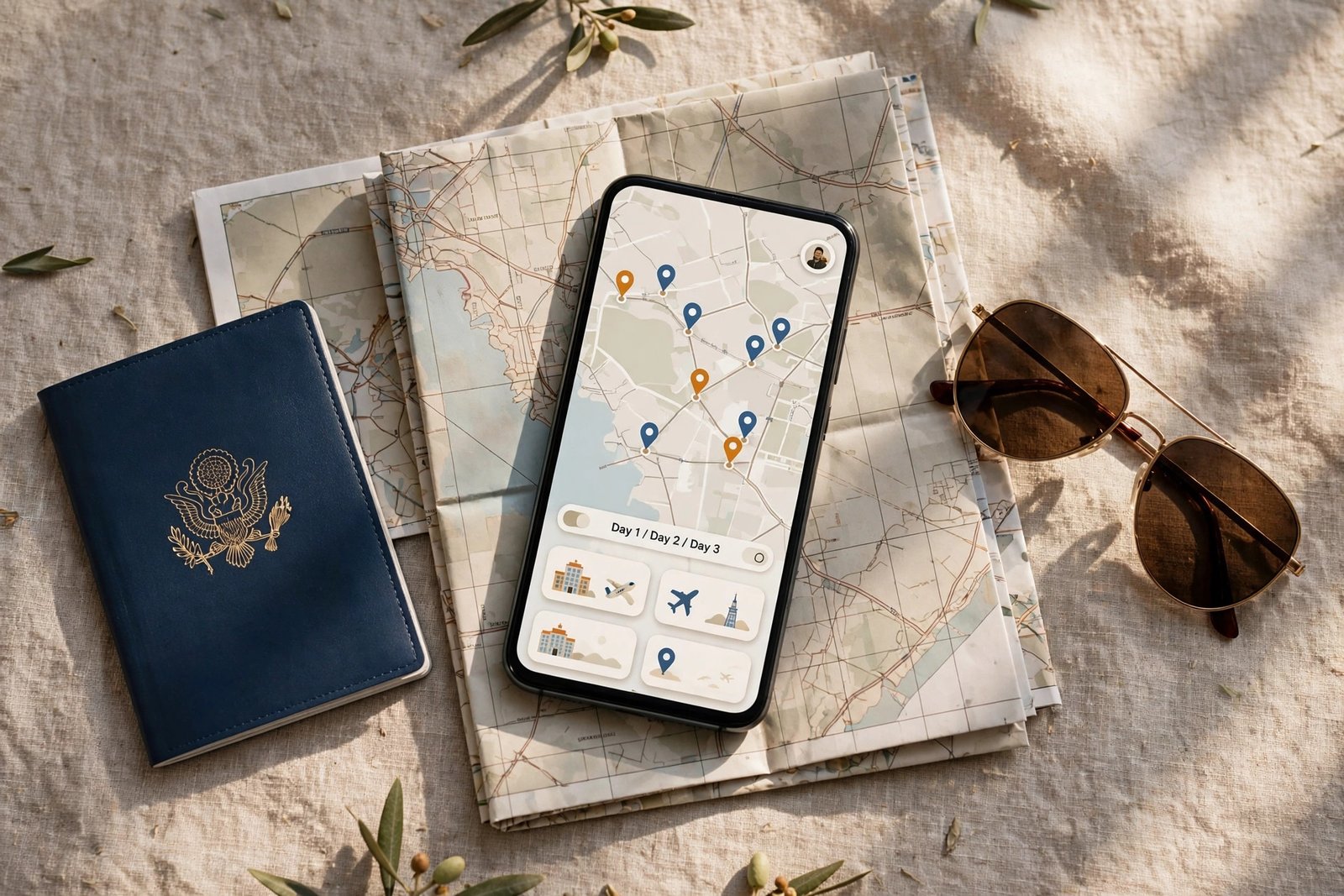
Planning apps help you turn a vague idea into a workable route. Look for tools that let you save places in lists, view everything on a map, and share the plan with travel companions. The strongest options let you build day-by-day schedules and keep confirmation numbers, tickets, and reservations in one place.
If your trip spans several cities or countries, planning gets genuinely complicated. Our multi-city trip itinerary guide walks through how to sequence stops, budget travel days, and avoid the backtracking mistakes that eat up vacation time.
One practical tip: build your itinerary in the app but also export a simple offline summary. Phone batteries die, signals drop, and a one-page printout or saved PDF of your hotel addresses and booking codes has rescued more trips than any single app feature.
Flight and Hotel Booking Apps
Booking apps fall into two camps: aggregators that compare prices across providers, and direct booking tools from airlines and hotel chains. Aggregators are excellent for research and price discovery, but before paying, compare against the airline or hotel’s own site. Direct bookings are usually easier to change or cancel, and loyalty points only accumulate when you book direct or through an approved partner.
Set up price alerts for your dates instead of checking fares daily. A well-timed alert can catch the fare drops that happen when airlines adjust pricing, and it removes the anxiety of wondering whether you bought too early. Just be ready to act quickly, because the best fares rarely last more than a day or two.
For accommodation specifically, filter ruthlessly: free cancellation, verified recent reviews, and a location you have checked on a map. A beautiful room in the wrong neighborhood costs you an hour of commuting every single day of the trip.
Navigation and Maps Apps
Offline maps are the single most underrated travel tool. Download the map of your destination over Wi-Fi before you leave, and you can navigate, search for places, and get walking directions without any data connection at all. This alone can save you from buying an expensive roaming package for a short trip.
Navigation apps also shine for public transit. In most major cities, they show train and bus routes with real-time departure information, platform numbers, and walking directions to the station entrance. That is often faster and cheaper than any taxi, and it helps you blend in instead of looking like a lost tourist with a paper map.
For road trips, a dedicated GPS app with live traffic data is worth it. It reroutes around jams automatically and gives realistic arrival times, which matters when you are racing a rental car return deadline or a dinner reservation.
Translation and Communication Apps
Camera-based translation apps have become remarkably good. Point your phone at a menu, sign, or train timetable and see the translation overlaid in real time. Download the language pack for your destination offline before you go, so the feature works without a connection.
Conversation-mode translation handles spoken back-and-forth well enough for hotel check-ins, asking directions, and basic shopping. It is not perfect, but it turns an impossible situation into a manageable one. Learning ten basic phrases in the local language still goes further for goodwill than any app, though.
Messaging apps matter too: many destinations run on specific platforms for everything from restaurant reservations to tour bookings. Install the locally dominant messaging app before arrival so you can confirm bookings and contact hosts the way locals do.
Money, Connectivity, and Safety Apps
Money apps that show real exchange rates help you spot bad deals instantly, whether at an exchange booth or an ATM. A multi-currency card or account paired with a rate-checking app means you stop guessing whether you are being overcharged. Always choose to pay in the local currency when a card terminal offers a conversion, because the terminal’s rate is almost never in your favor.
Staying connected is easier than ever. Our eSIM guide for travelers explains how to get local data in minutes without swapping physical SIM cards, which pairs perfectly with the offline-first app strategy in this guide.
Finally, keep a safety app or two ready: one that shares your live location with a trusted contact, and the local emergency numbers saved in your phone. Our guide to common travel scams in 2026 is worth reading before any big city trip, because the most expensive travel problems are the preventable ones.
FAQ
- How many travel apps do I actually need?
Seven to ten is plenty: one planner, one booking tool, one maps app, one translator, one messaging app, one money app, and your connectivity and safety basics. More than that and you spend the trip managing apps instead of traveling.
- Do travel apps work without internet?
Many do, if you prepare. Download offline maps, language packs, and your bookings before you leave Wi-Fi. Navigation, translation, and itinerary viewing all work offline in the major apps.
- Are free travel apps safe to use?
Stick to well-known apps from official app stores, check their privacy settings, and avoid granting location access to apps that do not need it. Never enter payment details over public Wi-Fi without a VPN.
- Should I book through an app or a website?
Use aggregator apps for research and price alerts, then check the provider’s own site before paying. Direct bookings are easier to modify, and the price is often identical once you factor in the aggregator’s fees.