
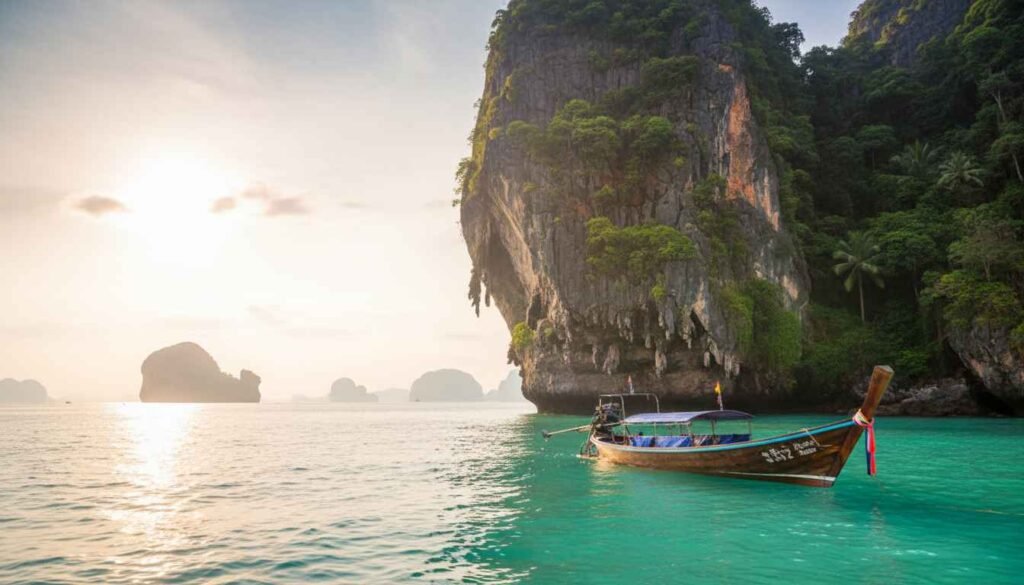
Krabi, on Thailand’s Andaman coast, is famous for its limestone cliffs rising straight out of turquoise water — and it lives up to the photographs. The province combines beach towns, island day trips, jungle pools, and temples, all within short boat or road journeys of each other. This guide covers the places that make Krabi worth a trip, and how to enjoy them without falling into the busiest tourist traps.
Railay Beach: cliffs, boats, and a car-free peninsula
Railay Beach is Krabi’s signature spot, and it is only reachable by long-tail boat from Ao Nang or Krabi Town, which keeps it free of cars and relatively calm. Towering limestone cliffs frame two main beaches: the west beach for swimming and sunsets, and the east side for mangroves and boat departures. Railay is a world-class rock-climbing destination, with routes for beginners as well as experts, and several schools offer half-day taster sessions. Stay a night if you can — Railay after the day-trippers leave is quieter and more atmospheric. Check tide times, as the beaches shrink considerably at high tide.
Ao Nang: the practical base
Ao Nang is Krabi’s main beach town and the most practical base for most visitors. It has the widest choice of hotels, restaurants, and tour boats, and it is the departure point for Railay, the Phi Phi Islands, and the four-island tour. The beach itself is pleasant but not Krabi’s best for swimming, so treat Ao Nang as a base rather than a destination in itself. In the evening, the beachfront road fills with restaurants and markets; try the seafood restaurants and night market stalls, and agree on boat-tour prices and inclusions before you board. Families travelling with children may also like our guide to places to visit in Krabi with family.
The Phi Phi Islands: worth it, with the right expectations
The Phi Phi Islands, a day trip from Ao Nang, are beautiful and busy in equal measure. Phi Phi Don has hotels, restaurants, and viewpoints, while Phi Phi Leh is home to Maya Bay, made famous by film and now managed with visitor limits and swimming rules to protect the beach. Go early in the day for quieter water, choose a smaller speedboat or long-tail tour over a large group boat if your budget allows, and respect the rules at Maya Bay — they exist because the beach was damaged by overtourism. If crowds put you off, the Hong Islands and the four-island tour (Chicken Island, Tup Island, Poda Island, and Railay) offer similar scenery with fewer people.
Emerald Pool and Hot Springs: the jungle interior
Inland from the coast, the Emerald Pool (Sa Morakot) is a warm, mineral-rich natural pool in the jungle, reached by a boardwalk through forest. It is a refreshing swim on a hot day, though it gets busy by late morning, so go early. Nearby, the Krabi Hot Springs (Khlong Thom) offer warm, terraced pools in a forest setting — a relaxing contrast to a day of boats and beaches. Combine both in a half-day trip, and pair them with the Tiger Cave Temple (Wat Tham Sua), whose 1,200-plus steps to the summit reward climbers with panoramic views over the province. Wear proper shoes for the temple steps and carry water.
Krabi Town and local culture
Krabi Town, the provincial capital, is often skipped by beach visitors, and that is a mistake. Its night market, riverside walk, and local restaurants offer the most authentic food in the province, and it is a good place to buy supplies or catch a bus onwards. The town’s temples and morning market show a side of Krabi that the beach resorts do not. If you have a spare half-day, spend it here rather than adding another beach. For another Southeast Asian coastal trip, see our guide to best places to visit in Vietnam.
Food, seasons, and practical tips
Krabi’s food is a highlight: fresh seafood, southern Thai curries, and market snacks such as roti and tropical fruit. Eat where locals eat in Krabi Town and at Ao Nang’s night market for the best value. The best weather is roughly November to April, when seas are calm and boat trips run reliably; May to October brings rain and rougher seas, though prices drop and the province is greener. Book island tours the day before rather than weeks ahead, so you can pick a good-weather day, and always wear a life jacket on long-tail boats. Protect the environment: do not touch coral, take rubbish with you, and choose tour operators who follow marine-park rules.
FAQ:
How many days do you need in Krabi?
Four to five days covers Railay, Ao Nang, a Phi Phi or four-island trip, and the Emerald Pool and hot springs. Add a day for Krabi Town or a slower island pace.
Is Krabi suitable for families?
Yes. Ao Nang and Railay have calm beaches, boat trips suit children who are comfortable on the water, and the Emerald Pool and hot springs are popular with families. Check life-jacket provision on boat tours.
When is the best time to visit Krabi?
November to April offers calm seas and reliable boat trips. The wet season, May to October, is cheaper and greener but brings rain and rougher seas.
Do you need to stay on Railay, or is Ao Nang enough?
Ao Nang is enough for most visitors, with Railay as a day trip. Staying a night on Railay is worth it if you want quiet evenings and early-morning climbing or swimming.
Final Thoughts
Krabi’s appeal is simple: cliffs, clear water, jungle pools, and good food, all close together. Base yourself in Ao Nang, spend a night on Railay if you can, take one island trip, and leave a day for the jungle interior — that balance is what makes a Krabi trip feel complete.