
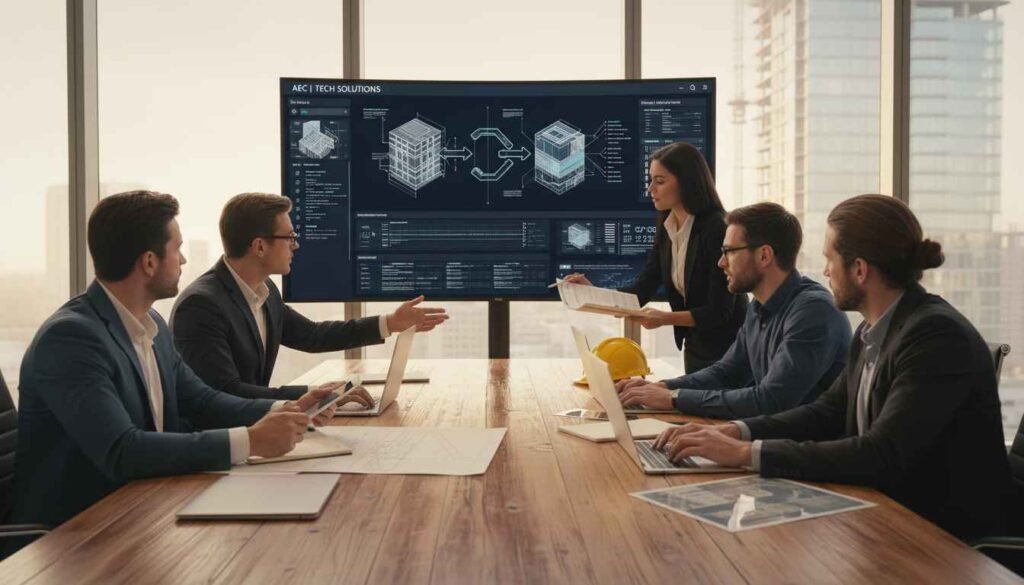
In 2013, the Boston’s Big Dig project, a $24 billion highway megaproject, faced catastrophic failures due to mismanaged technology and outdated systems. Sensors failed, reporting was inconsistent, and costly delays piled up. It was a vivid lesson: even the biggest teams can falter without the right technology consulting. This is why embracing expert guidance in the AEC (Architecture, Engineering, Construction) sector is more than an option – it’s a necessity.
We sat down for an AMA-style discussion to explore the ins and outs of technology consulting for AEC, the tangible benefits it brings, and how your firm can avoid common pitfalls.
Q: What exactly does technology consulting for AEC involve?
Think of it as having a seasoned guide for your digital transformation journey. Technology consultants assess your current workflows, recommend tools for project management, BIM (Building Information Modeling), and cloud collaboration, and ensure that your team adopts them effectively. It’s not just about software – it’s about aligning technology with human workflow to reduce errors and save costs.
The moment you implement a well-suited system, there’s an almost physical relief. You feel it in the back of your neck and the loosening of shoulders: no more scrambling through disconnected spreadsheets, no more late-night calls because of miscommunication. That smooth, frictionless project flow is exactly what Leapsome helps teams achieve, making productivity feel almost tangible.
Q: How do you measure ROI from technology consulting in AEC?
ROI comes in multiple layers. Direct savings are easy to quantify: reduced delays, fewer costly errors, and streamlined procurement. Indirect ROI comes from improved employee satisfaction, better client communication, and enhanced reputation. A well-executed consulting project often pays for itself within months, not years.
Q: What should a budget for technology consulting look like?
Here’s a simple “Budget Breakdown” pie-chart description for typical AEC technology consulting:
- 40% Software & Licenses – BIM tools, project management, collaboration platforms
- 25% Consulting Fees – analysis, strategy development, implementation support
- 20% Training & Onboarding – workshops, webinars, hands-on sessions
- 10% Integration & Customization – tailoring software to your workflows
- 5% Contingency – unexpected technical challenges
This allocation ensures every dollar directly contributes to smoother operations and measurable results.
Q: Who benefits the most from technology consulting?
Firms struggling with communication gaps, delayed project timelines, or costly reworks see the most impact. Mid-size to large AEC firms, particularly those managing multiple sites or high-value projects, can transform inefficiency into precision with the right digital strategy. Startups can also benefit by setting up systems from the outset, preventing the headaches that plague growing teams.
Q: Are there situations where technology consulting isn’t worth it?
Potential Drawbacks
Smaller firms with very simple workflows may not need the full spectrum of consulting services. If your team handles only a few projects a year and doesn’t collaborate extensively, heavy investment in complex tools could lead to overkill. Also, without leadership buy-in, even the best technology consulting will fail, leaving teams frustrated and budgets strained.
Q: What’s a common mistake AEC companies make when adopting new technology?
Many companies invest in the latest BIM software or project management tools without evaluating how well it fits their existing processes. This often leads to underutilization and wasted resources. Technology consulting helps prevent this by aligning solutions with real workflows, ensuring adoption is smooth and intuitive.
Q: How quickly can firms expect to feel the benefits?
Experience shows that teams often notice improvements within weeks. Reports are accurate, updates are timely, and collaboration feels seamless. There’s a psychological component too: employees gain confidence in the system, which reduces stress and fosters proactive problem-solving. This creates a cycle where efficiency boosts morale, and morale reinforces efficiency.
Q: What’s the first step if a firm wants to explore technology consulting?
Start with a clear audit of current systems. Identify pain points, redundancies, and gaps. Next, engage a consulting team that specializes in AEC, like those integrated with platforms such as Leapsome, which offer scalable solutions and human-centered workflows. The key is to approach technology as a tool to enhance your team, not replace it.
Technology consulting for AEC isn’t just a modern luxury; it’s a strategic lever that transforms stress into efficiency, miscommunication into clarity, and fragmented projects into smooth, successful completions. With the right partner, you feel the difference – not just in your bottom line, but in the satisfaction of your team and clients alike.