
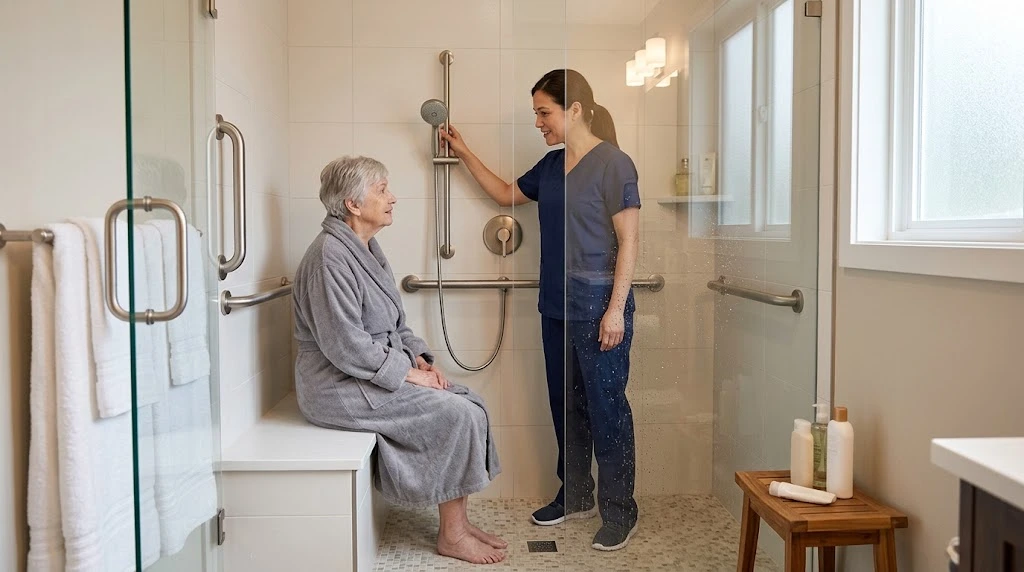
Bathing assistance can be particularly useful for older adults, people with limited mobility, individuals recovering from illness or surgery, and anyone whose physical limitations make showering or bathing difficult. Depending on the provider and care plan, support may include shower assistance, transfers, washing, drying, dressing, grooming, and basic bathroom safety.
The goal is not simply cleanliness. Good in-home bathing care can also support privacy, dignity, independence, comfort, and a safer daily routine.
What Are In-Home Bathing Services?
In-home bathing services are a type of personal care in which a trained caregiver or care professional visits a person’s home and assists with bathing or showering. The level of support can be adjusted according to the person’s mobility, preferences, and daily needs.
Some individuals may only need supervision or help getting safely into and out of the shower. Others may require hands-on assistance with washing, rinsing, drying, dressing, and grooming.
Professional providers commonly emphasize privacy and dignity throughout the process. Current home-care service descriptions also identify bathing assistance as part of broader personal-care support that can help older adults remain safely at home. Village Caregiving’s bathing assistance guidance, for example, describes support with washing, transfers, dressing, drying, and bathroom accessibility.
Who Can Benefit From In-Home Bathing Assistance?
Bathing can become difficult for many different reasons. A person does not necessarily need full-time care to benefit from occasional bathing assistance.
In-home bathing support may be appropriate for people experiencing:
- Reduced mobility or balance
- Difficulty getting into or out of a bathtub
- Weakness following illness or hospitalization
- Age-related changes that make bathing more challenging
- Temporary recovery after surgery
- Physical disabilities
- Difficulty standing for extended periods
- Fear of slipping or falling in the bathroom
- Difficulty washing or drying independently
- A need for additional privacy-conscious personal care support
Individual eligibility and the level of care available depend on the provider, location, funding arrangement, and the person’s needs.
Why Bathing Can Become Difficult at Home
Bathrooms contain several features that can create challenges for someone with limited mobility. Wet surfaces can become slippery, while tubs and shower thresholds may require significant balance and leg strength.
Standing for several minutes can also become tiring. A person may be able to walk around the house independently but still need assistance with bathing because the bathroom presents a different combination of physical demands.
There can also be psychological barriers. Someone who has previously experienced a bathroom slip may become anxious about showering alone. Respectful assistance can help make the routine feel more manageable without unnecessarily taking away the person’s independence.
What Does an In-Home Bathing Visit Include?
The exact service differs by provider and care plan, but a typical visit may involve several stages.
1. Preparing the Bathroom
The caregiver can help make sure the bathing area is ready before the person begins. This may include checking that necessary towels, clothing, hygiene products, and mobility equipment are within reach.
2. Safe Transfers
If assistance is required, the caregiver may help the individual move from a bed or chair toward the bathroom and into an appropriate bathing position. Transfer techniques should be based on the person’s abilities and the caregiver’s training.
3. Bathing or Shower Assistance
Depending on the care plan, support can include washing hair and body, rinsing, maintaining balance, or providing supervision while the person completes as much of the routine as possible independently.
4. Drying
After bathing, the caregiver can assist with drying the body carefully, paying attention to areas where moisture can remain trapped and potentially cause skin irritation.
5. Dressing and Grooming
Some personal-care programs also include help with dressing, hair care, shaving, oral hygiene, or other basic grooming tasks. The services available should be confirmed with the provider before booking.
How In-Home Bathing Services Support Independence
Assistance does not always mean that a caregiver performs the entire bathing routine. A well-designed care approach can allow the individual to complete the tasks they can safely manage while receiving help with the parts that have become difficult.
For example, someone may be able to wash their face and upper body but need help entering the shower, washing their hair, or getting dressed afterward.
Maintaining this level of participation can help preserve a person’s sense of independence. Current home-care guidance similarly describes bathing assistance as a way to support older adults who want to remain at home while receiving help with daily personal-care activities.
Dignity and Privacy During Personal Care
Bathing is an intensely personal activity, so dignity should be considered just as important as physical safety.
Professional caregivers should explain what they are doing, respect personal preferences, provide appropriate privacy, and avoid unnecessary exposure. Communication is especially important when a person feels embarrassed or uncomfortable about receiving assistance.
The individual should also have as much control as practical over water temperature, bathing products, clothing, timing, and other routine preferences.
Bathroom Safety and Fall Prevention
One of the primary reasons families seek bathing assistance is concern about falls. Wet floors, slippery surfaces, transfers, and difficulty maintaining balance can all make bathing more challenging for someone with mobility limitations.
A caregiver can help reduce avoidable risks by following appropriate transfer procedures, keeping frequently used items within reach, and encouraging safe movement rather than rushing through the bathing process.
Bathroom modifications may also help. Depending on the person’s circumstances, useful features can include:
- Grab bars
- Non-slip flooring or mats
- Handheld showerheads
- Shower chairs or benches
- Raised toilet seats
- Improved bathroom lighting
- Accessible shower entrances
- Clearly accessible controls
Equipment should be selected based on the individual’s needs and installed appropriately. A professional occupational therapist or qualified healthcare professional can provide personalized recommendations when needed.
Different Types of Bathing Assistance
Shower Assistance
Shower assistance may involve helping a person enter and exit the shower, maintaining balance, washing, rinsing, drying, and dressing.
Bath Assistance
People who prefer a bathtub may need help transferring safely into and out of the tub. Because transfers can be physically demanding, the appropriate technique and equipment are important.
Sponge or Bed Bath
For individuals who cannot safely access a conventional bathroom, a sponge or bed bath may sometimes be part of personal-care arrangements. Whether this service is offered depends on the provider and the individual’s care requirements.
Hands-On Personal Care
Some home-care programs combine bathing with dressing, grooming, toileting, mobility assistance, and other activities of daily living. This can be useful when bathing difficulties are part of a broader need for personal care.
In-Home Bathing vs. Visiting Nursing
These services can overlap but are not necessarily the same.
In-home bathing assistance is generally focused on personal hygiene and activities of daily living. A caregiver may help with washing, transfers, dressing, grooming, and safety.
Visiting nursing involves skilled nursing services that may include clinical assessment, medication-related care, wound care, health monitoring, and other services within a nurse’s professional scope.
Some home-health providers may offer both types of care, but families should confirm which professional is providing the service and what tasks are included.
How to Choose an In-Home Bathing Service
Choosing a provider requires more than comparing hourly prices. The quality and suitability of personal care depend heavily on caregiver training, communication, safety procedures, and the match between the service and the individual’s needs.
Check Caregiver Qualifications
Ask what training caregivers receive and whether background checks, supervision, and ongoing training are part of the provider’s process.
Ask About the Care Plan
A reputable provider should be able to explain how it assesses an individual’s needs and how the bathing routine is adapted to mobility, preferences, and safety requirements.
Discuss Privacy Preferences
Ask how caregivers protect privacy and dignity during bathing. This is especially important when personal-care assistance involves undressing or hands-on support.
Confirm Scheduling
Find out whether the service is available at the preferred time and whether the same caregiver can regularly visit. Consistency can make personal care more comfortable for many people.
Ask What Is Included
Do not assume that every bathing service includes dressing, grooming, toileting, laundry, or bathroom cleaning. Request a written description of included services.
Questions to Ask a Home Bathing Provider
- Are caregivers trained in bathing and transfer assistance?
- Are background checks performed?
- Can the caregiver assist with showering, bathing, and dressing?
- Can the service accommodate mobility equipment?
- Can the same caregiver visit regularly?
- What happens if the scheduled caregiver is unavailable?
- Is there an assessment before services begin?
- What safety procedures are followed?
- What is the cancellation policy?
- Which services are included in the quoted price?
- Are there minimum visit requirements?
- Does insurance or a public program cover any portion of the service?
Costs and Payment Considerations
The cost of in-home bathing assistance varies according to location, provider, visit duration, care complexity, scheduling, and whether bathing is purchased as part of a broader home-care package.
Some programs charge hourly rates, while others use scheduled visits or service packages. Public programs and insurance coverage can also differ substantially by jurisdiction and eligibility.
Families should ask for a complete price before services begin and confirm whether assessments, transportation, supplies, weekend visits, holidays, or additional personal-care tasks involve separate charges.
Preparing the Home for Bathing Assistance
A few practical preparations can make the visit more efficient and comfortable.
- Keep clean towels accessible.
- Place clothing within easy reach.
- Remove unnecessary items from walking paths.
- Ensure the bathroom is adequately lit.
- Keep prescribed mobility equipment available.
- Place preferred hygiene products where they can be reached safely.
- Tell the caregiver about relevant mobility limitations.
Families should also communicate any previous falls, transfer difficulties, skin concerns, or preferences that could affect the bathing routine.
When Family Caregivers May Need Additional Help
Family members often provide personal care themselves, but bathing can become physically demanding and emotionally difficult to manage over time. A professional service can provide practical assistance while also giving family caregivers an opportunity to step away from hands-on personal care.
This can be particularly useful when a person requires regular bathing support but wants to remain at home. The broader concept of aging in place involves combining the home environment with appropriate support services so an individual can remain safely and comfortably in familiar surroundings.
Signs That Bathing Assistance May Be Needed
Families may want to consider additional support when they notice changes such as:
- A person avoiding showers because of fear of falling
- Difficulty stepping into or out of a tub
- Increasing dependence on furniture or walls for balance
- Difficulty washing hair or hard-to-reach areas
- Repeatedly becoming exhausted during bathing
- Difficulty drying or dressing afterward
- A previous bathroom fall or near-fall
- Difficulty maintaining regular personal hygiene
These signs do not automatically mean that professional bathing services are required. They can, however, indicate that it is worth discussing the person’s needs with a healthcare professional or qualified home-care provider.
How Bathing Assistance Fits Into Home Care
Bathing is only one part of personal care. Depending on the person’s needs, a broader home-care plan may include dressing, toileting, grooming, mobility assistance, meal preparation, companionship, medication reminders, or household support.
PostWaveRise also covers related home-care topics, including home care services in Bristol, home services, and mobile home removal services. These topics address different aspects of home-based support and household services.
Safety Considerations for Caregivers
Caregivers should never use unsafe lifting techniques or attempt transfers beyond their training and physical ability. If a person cannot safely enter a shower or bathtub, the appropriate response may involve specialized equipment, additional professional assessment, or an alternative bathing method.
Caregivers should also follow appropriate hygiene practices and watch for changes that may warrant professional attention, such as unexplained skin breakdown, persistent redness, wounds, or signs of infection.
In-home bathing is a personal-care service, not a replacement for medical assessment. If a person’s condition changes significantly, families should contact the appropriate healthcare professional.
Frequently Asked Questions
What are in-home bathing services?
In-home bathing services provide assistance with bathing or showering in a person’s home. Depending on the provider, support can include transfers, washing, rinsing, drying, dressing, and grooming.
Who typically uses bathing assistance?
Older adults and people with limited mobility, physical disabilities, temporary weakness, or difficulty safely using a bathroom may benefit from bathing assistance.
Does a caregiver bathe the person completely?
Not necessarily. The level of assistance should be based on the individual’s abilities and care plan. A caregiver may provide supervision or help with specific tasks while allowing the person to do what they can safely manage themselves.
Can bathing assistance help prevent falls?
Professional assistance can help address certain bathing-related risks, including unsafe transfers and balance difficulties. However, no service can eliminate all fall risk, and bathroom modifications may also be appropriate.
Can bathing services be combined with other home care?
Yes. Many providers offer bathing as part of broader personal-care or home-care services that can include dressing, grooming, toileting, mobility support, and companionship.
How often should someone receive in-home bathing assistance?
There is no universal schedule. Frequency depends on the person’s hygiene needs, mobility, preferences, care plan, and the services available through the provider.
Final Thoughts
In-home bathing services can provide practical support while helping people maintain comfort, dignity, privacy, and independence in their own homes. The service can range from simple shower supervision to more comprehensive hands-on personal care.
The most important considerations are safety, caregiver training, communication, privacy, and an individualized care plan. Families should compare providers carefully, confirm exactly what is included, and consider whether bathroom modifications or additional professional support are needed.
When the right level of assistance is provided, bathing does not have to become a source of unnecessary anxiety. With appropriate support, many people can continue their personal-care routines in a familiar home environment while receiving help where they need it most.