Why Meal Prep Works (and Why Most People Quit)
Meal prep works because it moves decisions from busy weeknights, when willpower is gone, to a calm weekend hour when you are thinking clearly. People do not quit meal prep because the food is bad; they quit because they tried to prep twenty-one perfect meals in their first week and burned out. The system below starts small on purpose. Three or four days of lunches, one batch-cooked dinner component, and breakfasts you can assemble in minutes. That is enough to feel the difference.
Think of meal prep as a health habit that stacks with others. Pair it with our 30-minute home workout routine and our sleep hygiene guide, and you have the three pillars, food, movement, rest, running on autopilot instead of willpower.
Step 1: Plan Before You Shop
Pick your meals before you touch a grocery cart. Choose one breakfast you will eat all week, two or three lunch/dinner recipes that share ingredients, and two snacks. Sharing ingredients is the secret: chicken thighs, rice, and roasted vegetables can become three different meals with different sauces and seasonings, which keeps things interesting without tripling your shopping list.
Write the plan down, even roughly. A plan on paper beats a plan in your head because the grocery store is designed to make you forget what you came for. New to this? Start by prepping only lunches for four days. Master that for two weeks before adding dinners. Small wins compound; grand plans collapse.
Step 2: Shop With a List, Once
One weekly shop, one list, no midweek top-up runs. Group your list by store section, produce, protein, pantry, dairy, so you move through the shop once without backtracking. Buy versatile staples in bulk: rice, oats, eggs, frozen vegetables, canned beans, and a protein you actually like. Frozen vegetables deserve special mention; they are as nutritious as fresh, cheaper, and never wilt in your fridge while you lose motivation.
Set a budget before you go and track it for the first month. Most beginners are shocked to find meal prep cuts their food spending by a third or more, mainly by killing impulse takeout. That number becomes its own motivation to keep going.
Step 3: The Two-Hour Cook Session
Block two hours, put on music or a podcast, and cook in parallel. While grains simmer, roast a sheet pan of vegetables. While those roast, cook your protein. Multitasking across the stove and oven is what compresses a week of cooking into one session. Finish by portioning everything into containers while it is still easy to handle, and let food cool before sealing and refrigerating.
Keep seasoning simple but varied. Salt, pepper, garlic, olive oil, and two or three spice blends you enjoy will carry you far. A squeeze of lemon or a drizzle of a different sauce on serving day makes the same base ingredients taste like different meals. Bland meal prep is a motivation killer; seasoned meal prep is something you look forward to.
Step 4: Store It Right
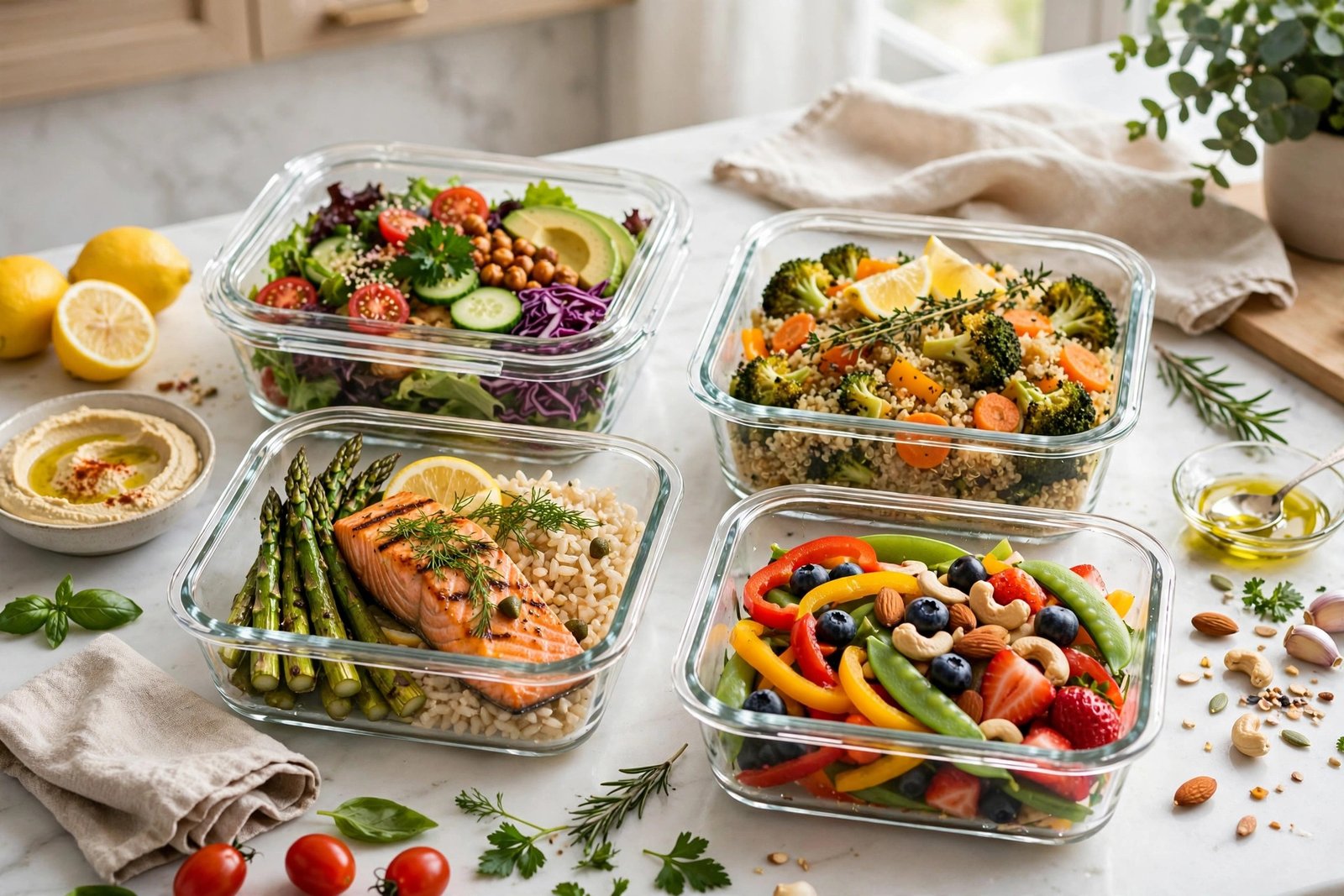
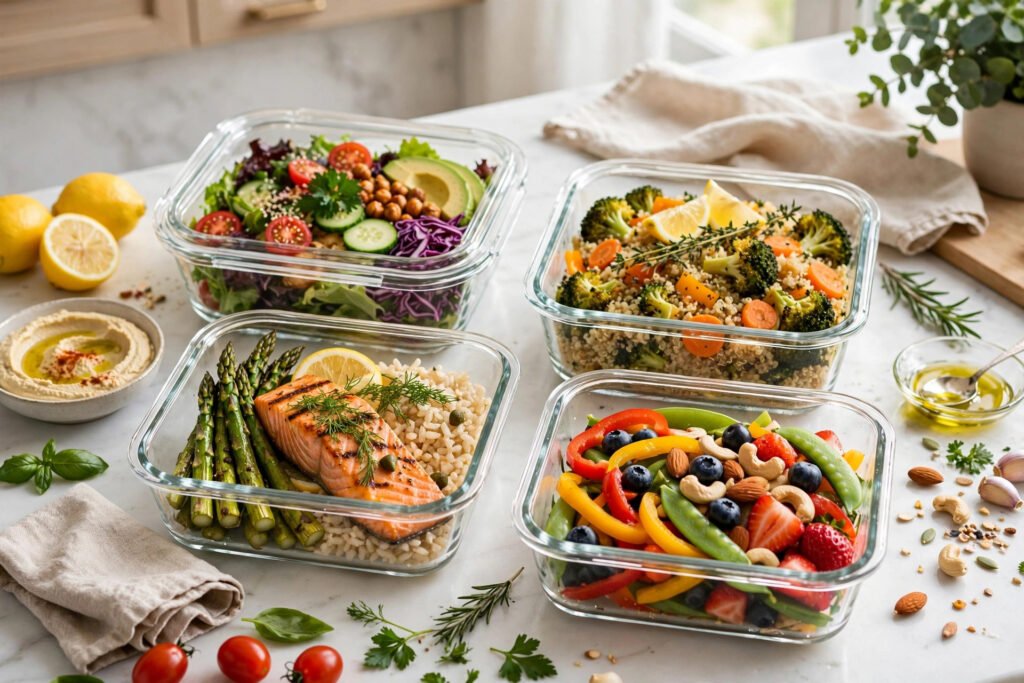
Most cooked meals keep three to four days in the fridge. If you prep on Sunday, plan Thursday and Friday meals as freezer-friendly or fresh-cook options. Glass containers with locking lids are worth the investment: they do not stain, they reheat evenly, and you can see what is inside without opening five lids.
Label containers with the day or contents if your household shares the fridge. Nothing kills a meal prep habit faster than someone eating your Wednesday lunch on Monday. For breakfasts, overnight oats and egg muffins are nearly indestructible: five minutes of assembly, zero morning effort.
Keeping It Going Past Week Three
Rotate two or three weekly menus so you never eat the same thing for a month straight. When a recipe bores you, change the cuisine, not the system: the same chicken-and-rice base becomes Mexican with cumin and lime, Mediterranean with oregano and feta, or Asian-inspired with soy and ginger. Our guide to morning walks pairs well here too; a short walk after your prep session turns Sunday cooking into a genuinely pleasant ritual.
Finally, forgive the imperfect weeks. Some weeks you will prep two days instead of four, and that is still two days of healthy eating you would not have had. Consistency over months beats perfection over days, every time.
A final practical note: invest in a good set of containers early. Cheap lids that warp after three washes will quietly kill your motivation; sturdy glass containers with locking lids last for years and make the whole system feel effortless.
FAQ
Three to four days for most cooked meals. Prep Sunday for Monday through Wednesday, and keep Thursday and Friday as freezer meals or quick fresh cooks.
Yes, significantly. Home-prepped meals typically cost a fraction of restaurant or takeout prices, and beginners commonly cut weekly food spending by a third once impulse takeout disappears.
Very little: a sheet pan, a pot, a skillet, and a set of containers with lids. A rice cooker helps but is optional. Do not buy specialized gadgets until the habit sticks.
Rotate two or three weekly menus and change flavor profiles rather than base ingredients. Different sauces, spices, and cuisines make the same staples feel new.