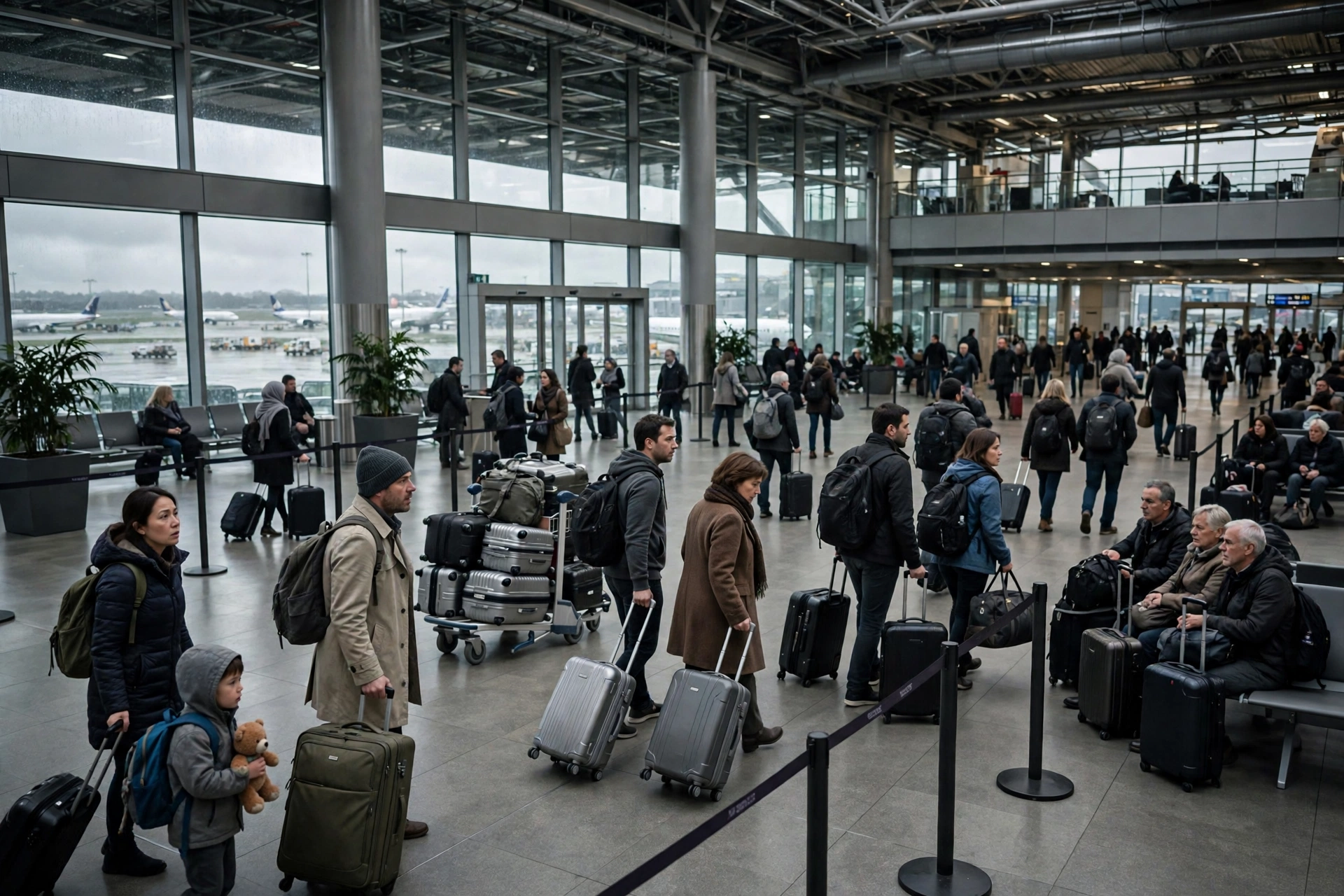

You’ve got a 14-hour layover. Do you book the hotel attached to the terminal, or brave the train into the city for a cheaper room and a few hours of sightseeing? The answer isn’t always the cheaper nightly rate — because the real cost of a layover hotel includes transit, time, and the sleep you’ll actually get. Here’s how to run the numbers and pick right every time.
The Real Cost Equation
Compare these two scenarios honestly before booking:
- Airport hotel: room rate + $0 transit + 15 minutes each way. You’re in bed 30 minutes after landing and at your gate 30 minutes before boarding.
- City hotel: room rate (often 20–40% cheaper) + round-trip transit ($10–$60 depending on the city) + 45–90 minutes each way + the stress of an unfamiliar route with luggage.
On a $120 airport room versus an $80 city room, the city option looks $40 cheaper — until a $50 taxi round trip and two lost hours enter the math. Once you add a realistic value for your time and rest, the airport hotel often wins on total cost, not just convenience. For general tactics on getting the lowest rate either way, see our hotel booking tricks guide.
The Layover-Length Decision Guide
Layover length is the single biggest factor. Use this as your rule of thumb:
- Under 6 hours: Don’t book a hotel at all. Use an airport lounge, a nap pod, or a day room inside the terminal if you need a shower. Leaving the airport isn’t worth the risk or the transit time.
- 6–10 hours: Airport hotel, almost always. After immigration, baggage, and check-in, a city trip leaves you 2–3 usable hours — not enough to justify the transit. The terminal-adjacent hotel gives you a real bed and a shower with zero risk of missing your connection.
- 10–18 hours: The judgment zone. If you land in daylight and the city is 30 minutes or less by direct train, the city hotel plus an evening of sightseeing can be worth it. If transit is complicated or it’s an overnight arrival, stay at the airport.
- 18+ hours / overnight: City hotel usually wins. You have a full evening and morning — enough for dinner out, a proper sleep, and a relaxed return. The experience value of actually seeing the city outweighs the transit cost.
Sleep Quality: The Hidden Factor
Not all layover sleep is equal. Airport hotels are engineered for transit passengers: soundproofed against runway noise, blackout curtains standard, 24-hour check-in and checkout, and wake-up calls timed to flight schedules. City hotels in the budget tier often sit on noisy streets with thin walls and 11 a.m. checkouts that don’t care about your 6 a.m. flight. If the whole point of the room is rest before an early departure, the airport hotel’s sleep quality is a feature worth paying for — especially before a long-haul leg.
One caveat: some airport hotels are dated and overpriced for what they are. Read recent reviews filtered for “noise” and “shuttle” before booking. A 10-minute shuttle ride at 4 a.m. that runs every 30 minutes can erase the location advantage.
When City Hotels Win
Choose the city when the layover itself becomes part of the trip:
- You have 12+ usable hours and the city center is under 45 minutes by direct transit.
- You’re traveling with companions and want a real dinner out, not a terminal food court.
- The airport hotel prices are inflated (common at hub airports during events) while city rates stay normal.
- You want a specific experience — a boutique hotel stay in a historic district beats a concrete airport block for a memorable night.
- Your onward flight departs after 10 a.m., so an early-morning transit back is relaxed, not frantic.
When Airport Hotels Win
Choose the airport when logistics dominate:
- Early departures (before 8 a.m.) or late arrivals (after 11 p.m.) — transit options shrink and taxi surge pricing appears.
- Short or uncertain layovers where a delayed inbound flight could compress your timeline.
- You’re traveling with kids, lots of luggage, or mobility constraints — every transfer multiplies the hassle.
- The city requires a visa or has a complicated entry process just to leave the airport (check this before you fantasize about sightseeing).
- You simply need maximum sleep. A 7-hour layover with a 5-hour sleep block at the terminal beats a 3-hour sleep block after a heroic city dash.
The Transit Trap: Costs Nobody Calculates
Three transit costs routinely surprise layover travelers:
- The last-mile problem. The train is cheap; the taxi from the station to the hotel at midnight is not. Check door-to-door, not station-to-station.
- Luggage storage fees. Some travelers stash bags at the airport to travel light into the city — storage runs $5–$15 per bag and eats into the savings.
- The return buffer. You must be back at the airport 2–3 hours before an international flight. On a 10-hour layover with 90-minute transits each way, that’s barely 4 usable hours in the city. Do this subtraction before booking anything.
Safety and Convenience at Odd Hours
Arriving at 1 a.m. changes the calculus. Airport hotels keep their lobbies staffed and lit around the clock; the walk from arrivals is short, well-signed, and indoors at many airports. A city hotel at 1 a.m. means navigating an unfamiliar transit system or trusting a late-night taxi in a city you don’t know. For solo travelers or anyone arriving exhausted, the airport option isn’t just convenient — it’s the lower-risk choice. If your trip involves tight connections generally, it’s also worth understanding what travel insurance actually covers for missed connections and delays.
The Day-Room Alternative
For 6–10 hour daytime layovers, look for day rooms — hotel rooms sold for daytime use (typically 9 a.m. to 6 p.m.) at 40–60% of the nightly rate. Many airport hotels offer them but don’t advertise online; call the front desk directly. Airport nap pods and shower-only facilities are even cheaper for shorter stops. This middle option often beats both a full hotel booking and suffering through the layover in a terminal chair.
Booking Smarter for Layovers
A few final tactics: book refundable rates for layover hotels, since flight delays can erase your layover entirely; check whether your airline offers free or discounted transit-hotel programs (several Middle Eastern and Asian carriers do on long connections); and join the hotel’s free loyalty program before booking — members often get flexible cancellation and early check-in that matter enormously on irregular layover schedules. Run the real-cost equation, match it to your layover length, and the airport-vs-city question answers itself.