
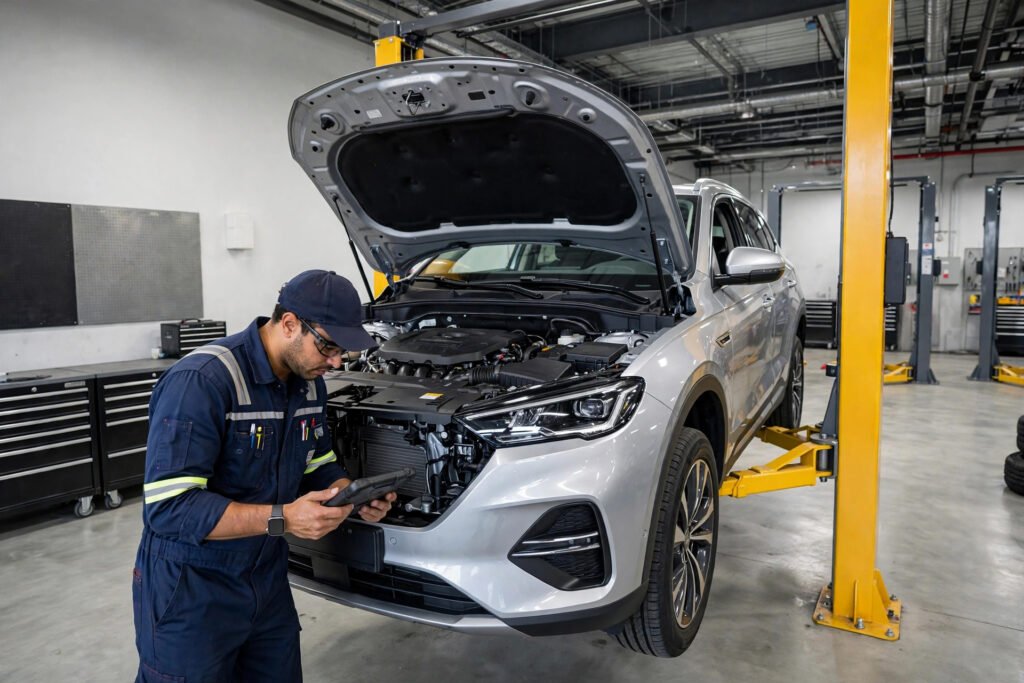
What a Good Auto Repair Shop in Temecula Actually Looks Like
Finding a trustworthy auto repair shop matters more than most drivers realize. A good shop saves you money over the life of your car; a bad one can turn a simple brake job into a four-figure invoice. If you’re looking at Redhawk Auto Service Temecula — or any auto service in Temecula, California — here’s how to judge whether it’s the right place for your car.
Services That Cover Most of What You’ll Need
Most full-service shops in the Temecula area handle the same core work: oil changes, brake repair and replacement, battery testing and replacement, tire rotation and alignment, AC service, and check-engine-light diagnostics. Shops that do fleet and diesel work as well tend to have deeper diagnostic equipment, which is worth knowing if you drive a European or hybrid vehicle.
Before you book, call and ask three questions: Do you provide a written estimate before work begins? Do you use OEM or quality aftermarket parts? And what’s your warranty on labor and parts — a 12-month/12,000-mile warranty is the industry baseline for reputable shops. For broader context on how the auto service business works, see how automotive shops market their services.
How to Read an Estimate Without Being a Mechanic
A fair estimate breaks labor and parts into separate lines and lists the exact part being replaced. If an estimate says “replace timing assembly” with one lumped price and no breakdown, ask for details. Timing belt or chain service is one of the most expensive routine jobs — typically $500 to $1,100 depending on the vehicle — so you want it itemized.
Watch for upsells during routine visits. A shop that recommends a cabin air filter at every oil change or “discovers” new problems on a car that drove in fine deserves a second opinion. On the other hand, mechanics who show you the worn part, explain why it failed, and let you decide are usually the keepers. This applies whether you drive a daily commuter or something special — even paint care has its own maintenance logic.
Maintenance Intervals Worth Following
Forget the old “every 3,000 miles” rule for oil. Most modern cars with synthetic oil go 7,500 to 10,000 miles between changes — check your owner’s manual. Brake pads typically last 30,000 to 70,000 miles depending on driving style; Temecula’s stop-and-go traffic on the 15 freeway wears them faster. Coolant flushes, transmission fluid, and spark plugs all have their own intervals, and a good shop will track them for you rather than pushing everything at once.
If your car sits in the Southern California heat, battery life is shorter than average — two to three years is common. Get it load-tested before summer.
Red Flags That Should Send You Elsewhere
No written estimate. Pressure to decide “today.” Refusal to show old parts. Quotes that are dramatically cheaper than three competitors — that usually means corners cut on parts. And any shop that won’t put a diagnosis in writing before authorizing repairs isn’t worth your trust.
The Bottom Line
The best auto shop is the one that treats your car like data, not like a sales opportunity: clear diagnostics, itemized estimates, quality parts, and a real warranty. Understanding the machinery behind the industry helps, but the real test is always the same — did they fix it right, at a fair price, the first time?